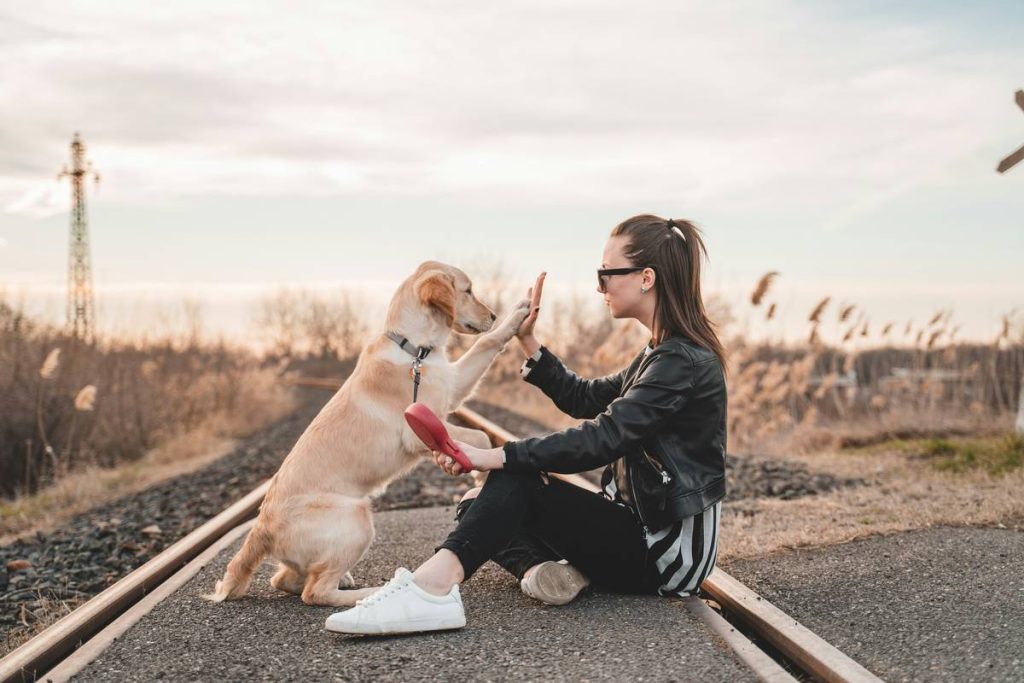
Most new dog owners spend weeks repeating “sit” like a broken record—only to get blank stares or wiggly defiance. And when treats disappear, so does the behavior. Frustration mounts. Trust erodes. But what if the problem isn’t your dog’s attention span—it’s your timing? treat-based sit reinforcement, done right, builds obedience that sticks—even without snacks in hand.
Why Generic “Sit” Commands Fail (Even With Treats)
Slapping a treat in front of a pup’s nose and yelling “sit!” teaches them to beg—not obey. You’re rewarding proximity, not precision. Worse, inconsistent timing creates confusion. One day you reward after the tail hits the floor; the next, you click halfway down. Dogs thrive on clarity. Ambiguity breeds inconsistency.
And here’s the kicker: many owners stop reinforcing too soon. They assume three successful sits means mastery. It doesn’t. Behavior fades without strategic maintenance—especially in high-distraction environments like parks or doorways.
treat-based sit reinforcement: The Step-by-Step Blueprint
Forget cookie-cutter tutorials. This method leverages canine biomechanics and operant conditioning in one tight sequence.
Capture the motion—not just the end pose
Start with your Yorkie standing. Hold a pea-sized treat near their nose. Slowly lift it upward and slightly backward—just past their eye line. Their head follows the treat; their hips naturally drop. The *instant* their rear touches the ground—click or say “yes!” and deliver the treat *at ground level*. This prevents jumping.
Fade the lure within 5 sessions
By session three, mimic the hand motion *without* a visible treat. Reward only when they sit from the empty gesture. By session five, add the verbal cue “sit” *after* the hand signal—not before. Why? Because dogs process visual cues faster than verbal ones. Layering them backward sabotages learning.
Proof it in chaos
Practice near distractions—but lower your criteria. Accept slower sits near a window. Reward generously. Gradually raise standards as focus improves. Real-world reliability comes from graduated challenge, not backyard perfection.
| Training Phase | Treat Frequency | Verbal Cue Timing | Success Metric |
|---|---|---|---|
| Luring (Sessions 1–2) | Every single sit | None used | Hips touch floor within 2 seconds of hand lift |
| Transition (Sessions 3–5) | 80% of sits | After hand signal | Sits on empty-hand gesture alone |
| Maintenance (Session 6+) | Variable ratio (30–50%) | Before cue OR on distraction | Holds sit for 5+ seconds amid mild distractions |
The Industry Secret: Your Treat Isn’t the Reinforcer—Your Release Is
Here’s what trainers won’t tell you: the most powerful reinforcer in early sit training isn’t the snack—it’s permission to move. Yorkies are kinetic. Forcing stillness feels punishing. So after your dog sits and you mark it (“yes!”), immediately give a release cue like “okay!” followed by play, a walk, or even chasing a treat tossed forward. Suddenly, sitting becomes the gateway to freedom—not a boring dead end. The treat? Just the initial spark. The release? That’s the engine.
Think about it: would you stay seated if someone handed you coffee but never let you drink it? Exactly.
FAQ
How many treats should I use per session?
Use 5–10 pea-sized treats max. Short, frequent sessions beat marathon bribing. Quality over quantity.
My Yorkie sits only when I have treats. What now?
You skipped the fade phase. Go back to empty-hand gestures. Randomize rewards—sometimes a treat, sometimes a toy, sometimes just “good dog!”
Can I use kibble instead of special treats?
Yes—if your dog finds it motivating. If they sniff and walk away, upgrade to something higher value like freeze-dried liver.